.:[Double Click To][Close]:.
Get paid To Promote 
at any Location


Showing posts with label EU patent. Show all posts

Tuesday, February 15, 2011

First divorce, now separation: European Parliament votes for enhanced cooperation

The European Parliament's new building is designed
to reflect that body's flexibility in dealing with patent law
A press release from the European Parliament today ("EU patent: Parliament gives go-ahead for enhanced cooperation", here) carries some much-anticipated news: the European Union is to get its own not-quite-Community patent.  According to the press release,
"The European Parliament gave its consent ... for a common EU patent system to be created using the enhanced cooperation procedure. In December 2010, twelve Member States made a request to launch such a procedure, after it was concluded that not all the Member States could agree on an EU-wide patent system.

All the other Member States except Italy and Spain have since indicated they will sign up to the procedure. These two countries can still join in at any time if they wish.

Parliament gave its backing today for the procedure to go ahead by 471 votes to 160, with 42 abstentions.

Next steps

The Council of Competitiveness Ministers is expected to formally adopt the decision authorising enhanced cooperation on 9-10 March. The Commission will then submit two legislative proposals: one establishing the single patent (under the co-decision procedure) and the other on the language regime (consultation procedure). In today's resolution, drafted by Klaus-Heiner Lehne (EPP-ED, DE), MEPs call on the Council to use the co-decision procedure for both proposals.

[Usual paragraph about how long everyone's tried to get consensus and about how much more it costs to get a patent in Europe than in the US omitted]

A unitary patent system, abolishing differences between Member States over patent rights, would make it easier and cheaper for inventors to protect their patents throughout the EU, help tackle infringements and create a level playing field for Europe's innovative businesses [unless, of course, it doesn't. This at least can be quantified].

What is enhanced co-operation?

Under the Lisbon Treaty, "enhanced co-operation" can be used to enable a group of Member States to adopt new common rules when a unanimous EU-wide agreement cannot be reached.

Such a procedure may go ahead only after the Council authorises it, on the basis of a Commission proposal, and after the European Parliament has given its consent.

This is the second case of enhanced cooperation, the first being the divorce law approved in 2010".
Early comments are generally supportive, if the early press releases thudding into tytoc collie's emaiil in-tray reflect the consensus. Keith Hodkinson (Marks & Clerk chairman) has described the current system as being patchy, adding: "This hasn’t helped anyone, least of all the SMEs we are trying to help innovate. No one EU country is being excluded by the scheme – all can join or not as they choose" He adds, “We must not let language issues be used to obstruct a desirable reform.”  Ilya Kazi (partner, Mathys & Squire LLP) agrees: "Until now an innovator who has successfully navigated the search and examination process and been granted a patent in Europe has immediately faced a bill for filing translations (that may well never even be read) often amounting to more than the entire cost of the battle of getting to grant.  ... A more pragmatic, complete solution that makes the formal part of the process cheaper and more straightforward is long overdue".

Says tytoc collie, the adoption of an enhanced cooperation programme will only bring benefits if (i) it is formulated in a manner which will allow it to so and (ii) the various professions nationally and across the EU who service the innovative industries are able to adapt to it and make it work.  The pan-European Community trade mark -- an excellent idea and now working fairly well -- has taken 15 years to get into proper working order, since the new system took some time to learn and, more tellingly, the old system took a very long time to forget.  Germans, Dutch, British and others imported their old habits and their old conceptual assumptions into the running of the new system, resulting in a large degree of uncertainty and a huge quantity of requests to the European Court of Justice to explain how the system works.  An EU patent must work more quickly: 15 years is substantially longer than the lifetime of the average granted patent.

Wednesday, December 22, 2010

That strange, dysfunctional patent: what shall we call it?

Looking for a 'tasteful'
image, we found this
Last week tytoc collie called for readers to nominate, then vote for, the most appropriate name for the patent that would cover only a number of cooperating EU Member States (see earlier post here for a bit of background).

Frustratingly, the poll has simply disappeared and all attempts to retrieve it via Website Toolbox have failed.  Anyway, when the Kat last checked, fairly late last night, some 217 votes had been cast.  Far and away the most popular name for the new part-patent, among readers of this weblog at any rate, was the Community Restricted-Area Patent, presumably not merely because of its highly apt description but because of its even more apt acronym, CRAP.  The Community Restricted-Area Patent received 94 votes, about three times as many as the next most popular.

Says tytoc collie, this is one of the greatest tests of democracy which the European Union has faced: if the people vote for CRAP, will they get it?  Says Merpel, according to some opinions, this is no question: it has sometimes been suggested the European Union delivers CRAP whether people vote for it or not.

A versatile word: CRAP as a surname, an acronym and an place name.  In the plural: a patented game played with cards and dice, as well as an unpatented one.


STOP PRESS: the Website Toolbox has roared back into action and the final results of the survey look like this:

The EU is contemplating a Community patent that only
covers part of the Community. What should it be called?


The Community Restricted-Area Patent (CRAP)  100 (45%)
The Selective Countries Regional Area Patent (SCRAP)  33 (15%)
EU Enhanced Cooperation Patent  27 (12%)
The Disunity Patent  23 (10%)
The EuroPartPat  15 (7%)
The Part-O-Pat  13 (6%)
The Community Patent Minus A Few  12 (5%)

223 votes were cast

Thursday, December 16, 2010

United we stand, divided we fall, enhanced we ... er ... cooperate

Dreaming of a unitary patent:
but will enhanced cooperation
be a nightmare?
Just in case some of you have not yet experienced your first bout of Unitary Patent Fatigue Syndrome, here's some more material for you to digest.  It's a media release from the European Commission, "Patents: Commission opens the way for some Member States to move forward on a unitary patent", dated 14 December.  It reads, in relevant part:
"Today the European Commission presented a proposal opening the way for "enhanced cooperation" to create unitary patent protection in the EU. Such unitary patent protection would allow those Member States that so desired to agree to establish a patent, valid in all participating countries, that could be obtained with a single application. ...[A]s the EU's Council of Ministers has not been able to agree unanimously on the EU patents' language requirements, the Commission has now tabled a proposal opening the way for "enhanced cooperation" to be authorised in this area, in accordance with the EU Treaties. ...

Today's proposal follows a request from 12 Member States (Denmark, Estonia, Finland, France, Germany, Lithuania, Luxembourg, The Netherlands, Poland, Slovenia, Sweden and the United Kingdom [No Belgium?]). It would be the second time that the "enhanced cooperation mechanism" were used (see IP/10/347) and would allow some Member States to move forward immediately, leaving the possibility to others to join at a later stage [Assuming that they should wish to do so; but governments of Member States that foster very little domestic innovative activity of their own and are merely a patch of ground over which foreign businesses exercise monopolies, may face little internal pressure to join up and may see some political benefits in staying out]. The proposed decision to authorise enhanced cooperation on unitary patent protection needs to be approved by the EU's Council of Ministers by qualified majority, after the consent of the European Parliament. The Commission will come forward in 2011 with detailed proposals for implementing enhanced cooperation for unitary patent protection, including translation requirements.

Following the negotiations led by the Belgian Presidency of the EU's Council of Ministers, the detailed proposal on translation requirements would build on the existing language regime of the EPO at competitive costs. The unitary patent would be examined and granted in one of the existing official languages of the EPO - English, French or German.

In order to facilitate access to a unitary patent, it should be made available to all applicants in the EU [and, the Kat believes, non-EU applicants too if they're from Paris Convention countries] on a non-discriminatory basis. Their inventions would be protected in all EU countries participating under the enhanced cooperation. Applicants in the EU whose language was not English, French or German would have the option to file applications in any other official language of the European Union [but not Welsh: that language has equal status with English for public life in Wales, where the Intellectual Property Office is based, but it is not an official language of the EU]. The costs for translation into one of the official languages of the EPO (to be chosen from English, French or German by the applicant when they file the application) would be eligible for compensation. ...

Under the EU Treaty and the Treaty on the Functioning of the EU, enhanced cooperation allows nine or more countries to move forward on in a particular area as a last resort if no agreement can be reached by the EU as a whole within a reasonable period. Other Member States can opt to join at any stage before or after enhanced cooperation has been launched.

More information here".
tytoc collie somehow thinks that, once the pressure for a real unitary patent is eased by "enhanced cooperation", the two-tier phase will become permanent pretty quickly and will be all the more difficult to shift.  He would have preferred persisting with the usual negotiations, without the regular imposition of childish and arbitrary "last chance" deadlines, and keeping the single patent for all EU territory as the sole acceptable aim.

Friday, December 10, 2010

Patent uncertainty: Goldilocks and Google

tytoc collie has received this comment from an employee of a well-known patent-granting office.  For the sake of his job security, peace of mind and future promotion prospects he prefers to remain anonymous.  He writes:
"Reading the plea in your recent post for someone to explain how a single EU patent would lead to greater legal certainty, may I proffer an explanation?

The key is Article 69 EPC and its attendant protocol, regarding interpretation of the scope of protection provided by a claim. As is well known, this boils down to stating that the scope of protection is not too broad, and not too literal, but somewhere in between [Indeed, says the Kat -- and while he's not convinced that there is such a thing as "too literal", we all know what this means]. As neither the EPC, the protocol nor EPO Board of Appeal case law has, as far as I am aware, characterised a skilled Goldilocks who can get it just right, this has led to well-known differences when the subject-matter of a European patent is subjected to the rules of interpretation in the courts of the countries of the resultant national patents, albeit according to the same initial criteria. Cases such as Catnic/Formstein and Epilady (discussed here) spring to mind, representing Britain v Germany. Legal certainty is, as is well known, compromised by varying interpretations across the EU's single market.

The EU patent will solve this simply because there will be one patent interpreted, ultimately, in one place, although this has little or nothing to do with language per se. It does, however, have everything to do with establishing a full EU patent regime, with a single legal structure and preliminary reference procedure to address problems such as this. Legal certainty is obviously enhanced by having one interpretation and ultimate decision which is applicable throughout the single market. None of the criteria are being changed, but at least there will be a facility for imposing uniform interpretation. One should not of course forget the other 11 non-EU EPO states, which it is planned will be subject to the "E" part of the EEUPC, although this aspect appears to be receiving little attention in the light of the present EU initiative!"
tytoc collie thanks his correspondent for the time and effort taken in seeking to explain 'certainty', but he remains unconvinced that this certainty is of any substantial benefit to industry and business, if it exists at all.  The interpretation of a patent is an after-the-event occurrence.  Decisions concerning the investment in the development, testing, manufacturing and marketing of products or operating processes -- whether covered by a patent or whether attempted by a competing third party -- will generally have been taken long in advance of a final decision as to whether, on even the best application of the principles of the protocol to Article 69, an infringement exists.  What will happen is that investors, managers, manufacturers and other commercial interests will find that a specific patent is either infringed everywhere in the EU or nowhere in the EU, while at present they find that the same patent is infringed in all, some or no countries in the EU.  Are we not just replacing one uncertainty with another?

Merpel adds, if you look at the total number of patents granted in Europe but then start totting up the total of cases in which national courts come to conflicting decisions on the application of the Protocol to Article 69, are they not a tiny proportion of the whole?  We talk of "cases such as Catnic/Formstein and Epilady", but how many of us can confidently, off the top of our heads, name another five examples?

Wednesday, December 8, 2010

The EU patent: countries break ranks in search of unity

Via tytoc collie's friend Stephanie Bodoni (Bloomberg) comes news, fresh from the very heart of Europe, that the political will to sort out a new European Union-driven patent system is being taken a step further.  According to this charming and impeccable source:
"France, Germany and eight other nations pushed to create a Europe-wide patent system ... leaving out those countries that rejected the plans over language issues.

EU nations last month failed to break a deadlock on creating a region-wide system over  isagreements on what languages should be legally binding. Belgium, which holds the rotating EU presidency until the end of the year, “has tried its utmost to find a compromise” for an EU-wide patent, the 10 countries said in a letter to the European Commission.
“It is clear that the objective of the creation of a unitary patent protection in the territory of the EU cannot be attained within a reasonable period of time by the Union,” the countries said in the Dec. 7 letter to Michel Barnier, the EU’s internal-market commissioner.
Attempts to reach an agreement since 2000 have faltered over the language issues. The 27 EU nations today share 23 official languages [Merpel wonders whether "share" is the right word here,given what the 27 nations do with their languages] and numerous compromise proposals have failed to satisfy political demands or risked increasing translation costs for companies.
“We are ready, we are prepared, to start the procedure” for creating a more harmonized EU patent system, Barnier told reporters in Brussels today. “The commission will present proposals on the future content of a single protection for patents across the EU.”  The new plans ... will be based on the latest compromise proposed by Belgium, said Barnier. “Many more” than the 10 countries that signed the letter will join this so-called enhanced cooperation system, he said. The closest thing to a European Union-wide patent today is for companies to apply for a patent with the European Patent Office, which isn’t part of the EU and has 38 member countries. The patent then breaks up into a bundle of patents which companies must defend in each individual country.
...S pain was among the main opponents to the latest compromise proposals, rejecting the idea to make English, French and German the official languages of a new EU patent system. Spanish EU Affairs Minister Diego Lopez Garrido on Nov. 10 told EU ministers at a meeting in Brussels that the plans discriminated against the Spanish language. Spain supports an English-only system. 
EU ministers will meet again in Brussels on Dec. 10 to discuss the new plan. The letter to Barnier was signed by France, Germany, Estonia, Denmark, Finland, Lithuania, Luxembourg, the Netherlands, Slovenia and Sweden".
Previous recent posts here, here, here and here. Further developments are keenly awaited.

Friday, November 26, 2010

Europe burns with impatience, while heat is turned up on Pizza

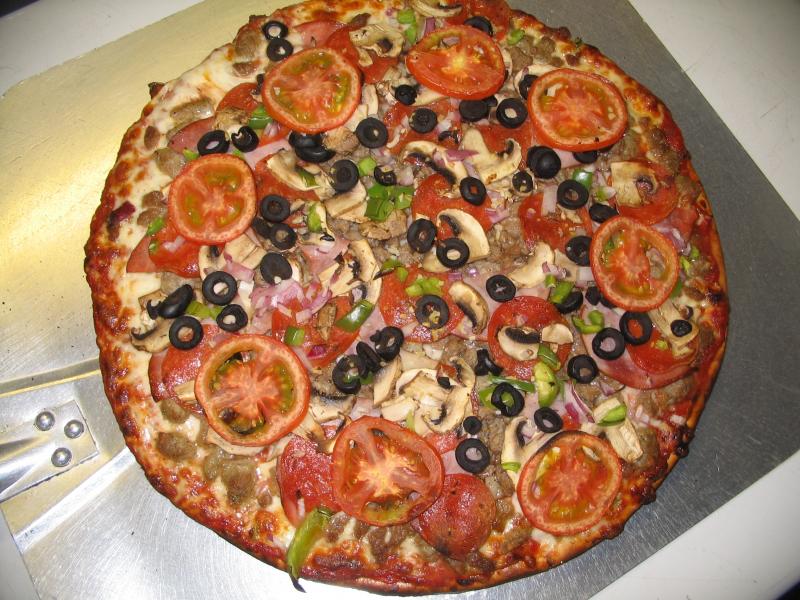
Like the EU patent, the perfect pizza
requires the subjugation of each
individual ingredient for the good
of the whole
Many of the readers of this blog also avidly follow developments as they unfold on EurActiv.  Those who do will not have been disappointed by today's offering, "An EU patent without Italy? Member states turn up the heat".  It runs like this:
"Italy found itself in a political squeeze [Merpel says, it makes a change from the squeezes apparently preferred by that country's Prime Minister: see here and here] on Thursday ... as several key European countries moved to create a unified patent to protect the design of products sold across their borders.

The European Commission presented its proposal for an EU-patent a decade ago, but negotiations have been bogged down by linguistic, technical and legal difficulties. [deleted: boring repetition of how expensive patenting is in Europe, the usual recital of how inconsistent are its judicial decision and the popular assertion that the outcome of patent disputes would be more predictable if there were only one court]
The Commission presented in July a proposal to end the deadlock over linguistic disputes. The EU commissioner in charge of the dossier, Michel Barnier, proposed to maintain English, French and German as official languages for an EU patent but to allow paid-for translations of patents filed in other EU languages [which would work well in practice, but not in principle since ...] ... this is opposed by other member states, including Spain and Italy.
The Belgian Presidency said overcoming legal and linguistic problems would be a top priority during its six months at the helm of the European Council. A number of compromise proposals have been circulated and five competitiveness Councils have been scheduled during the six-month presidency, which ends in December.
At the last Competitiveness Council on 10 November it was clear negotiations had hit a serious impasse.
After more than a decade of frustrating negotiations to draft a single patent for the 27-nation bloc, a group of countries have decided to go it alone [This shows that the EU is not a one-size-fits-all entity and that there's room within its rules for a surprising degree of diversity and creativity].
Sweden, Germany, the United Kingdom, Ireland, the Netherlands, Slovenia and Estonia said they will formally ask the European Commission to help them write a common patent agreement based on "enhanced cooperation" between those countries. More EU member states are welcome to join the pact.
It was a bold and rarely used tactic to pressure Italy to drop its demand that Italian be one of the official languages of an EU patent. Without Italy's vote, the EU Council of Ministers – which represents the bloc's 27 governments – did not have unanimous support behind a proposal for an EU patent that would be translated into English as well as French or German, the three working languages of the Union.
"It's clear we could not reach an agreement in the foreseeable future," said Swedish Minister for Enterprise and Energy Maud Olofsson. ...
[More standard regurgitation of the need for an EU patent deleted]
The single patent is a critical piece of several EU strategies, including the single market and the Innovation Union. "I don't think we can afford the luxury of not growing competitively," said Frenchman Michel Barnier, the EU's commissioner for the internal market and services [Says Merpel, this is a rare and delightful concession by a Frenchman that we can't afford luxuries.  Tell that to the European Court of Justice in Case C-487/07 L'Oreal v Bellure, as criticised by the referring court here.  The only reason why luxuries are luxuries is that we can't afford them and they're protected against competition].
He said he would act rapidly on the request for enhanced cooperation on a new patent, and present a proposal to the Competitiveness Council at its meeting on 10 December.
This would mark only the second time that member states have used the side door of enhanced cooperation to sidestep blocking members. In July, 14 countries – including Italy, Spain, Germany and France - agreed to simplify divorce rules for couples of different nationalities.

This time, however, Italy appears ready to fight any proposal about enhanced competition on patents. "This is not possible," said Giuseppe Pizza [real name: not a spoof, despite the title of the EurActive article], Italian secretary of state, claiming such action would undermine the internal market of the EU.
Surprisingly, Spain is no longer insisting that Spanish also be an official patent language, while Poland took Italy's side and requested another round of negotiations. France, the Czech Republic and Malta all said they were prepared to explore and analyse a Commission plan for enhanced cooperation on a patent.  Such a patent would need the participation of at least nine member states. It would have to be approved by a qualified majority in the Parliament and the Council, but only participating members would be allowed to vote in Council, according to legal staff.
"It's high time for those who wish to move forward with a higher form of cooperation to do so," said Peter Hintze, a German secretary of state. "The world is changing so quickly and the speed of change is accelerating. We cannot wait." [Actually we can. Change always takes time and it's better to get it right. It has not been demonstrated that the speed of change in the world at large has been affecting the scheme for the grant of patents in Europe as they are now]."
The plot thickens.

History of the pizza here
English pizza recipes here
European patent for the new, improved pizza here

Thursday, November 11, 2010

Spanish fly in the ointment spoils EU patent dreams

Via a number of sources, including tytoc collie's friend Stephanie Bodoni (Bloomberg) comes news that the European Union has [predictably, say some people] failed to find a compromise on a system to make it easier to obtain region-wide patent protection [click here for recent background information], to the great disappointment of  internal-market commissioner Michel Barnier.

Some folk say that the non-existence of an appropriate protection that's also acceptable in terms of costs puts Europe's businesses at a great disadvantage against the US, Japan and China -- but the Kat, without expressing a formal opinion at this point, would like to know precisely why this is so, since the European, US, Japanese and Chinese patent systems are level playing fields that operate the same way for patent applicants (and opponents) of all nationalities. At present the 27 EU nations currently share 23 official languages; numerous proposals and compromises have either failed to satisfy political demands or have risked increasing translation costs for businesses.  Spain is said to be the main culprit but this Kat feels sure that, if Spain had not gone to great lengths to fight for a more elastic language regime, one or two other countries would not have had the luxury of hiding behind their Iberian brethren and would have had to attract the opprobrium themselves.

Fly in the ointment here
Spanish fly here

Wednesday, November 10, 2010

Belgians go into overdrive to secure acceptable compromise on EU patent

Will the Belgians break it?
tytoc collie has learned, via EurActiv, that the European Union's Belgian Presidency has proposed a new compromise text which is designed to break the long-standing deadlock over patents in the European Union which, says this source, "could lead to an historic deal at an extraordinary Competitiveness Council next Wednesday" -- ie today. According to EurActiv,
"Moves to develop a single patenting system for the EU began in 2003 but progress has been hampered by linguistic, technical and legal difficulties [Let's not forget widespread indifference within some industrial sectors and deep suspicion within some professional quarters, says Merpel].

...  Companies often have to fight legal action in several European countries at once, and national courts regularly come to conflicting conclusions on identical cases. A single patent court would make litigation cheaper [agreed] and more predictable [not sure: the range of possible outcomes would be smaller, but not necessarily more predictable].

The Commission presented in July a proposal to end the deadlock over linguistic disputes. The EU commissioner in charge of the dossier, Michel Barnier, proposed to maintain English, French and German as official languages for an EU patent but to allow paid-for translations of patents filed in other EU languages. However, this is opposed by other member states, including Spain [as guardian of a vast Spanish-speaking diaspora] and Italy [as the home of some of the world's best-loved pastas?].

The Belgian Presidency has said overcoming legal and linguistic problems will be a top priority during its six months at the helm of the European Council. A number of compromise proposals have been circulated and five competitiveness Councils have been scheduled during the six-month presidency, which ends in December. The new proposal, which has been circulating among EU diplomats since 3 November, contains important steps forward compared to the previous compromise text tabled in October, which proved ineffective [says Merpel, they're only "important steps forward" if they are accepted. If not, then they too are ineffective]. This triggered the convening of a special Competitiveness Council [today], which follows an official and an informal Council that have already been held during the Belgian Presidency and precedes another two meetings scheduled for November and December. ...

If no solution is found at the upcoming meeting, ministers in charge of competitiveness matters will meet again on the patent issue on 26 November and 10 December [This sounds like a punishment for the ministers].

... The most relevant element seems to be the provision of no clear deadline for the end of a transitional period preceding the entry into force of a permanent regime, upon which English, French and German will become the three fully-fledged official languages for the EU patent [This raises an interesting question: why should an unacceptable solution become acceptable simply on the basis that there is no specific date for implementing it?]. During the transitional period, translations of EU patents should be available only in English and not in the other two official languages. This would reduce costs and make it easier for firms of other EU countries to benefit from the new system.

"As long as high quality machine translations are not available for EU patents, which are not granted in English, a translation into this language has to be provided by the applicant," reads the Belgian proposal.

The vagueness of the transitional period's duration, which some diplomatic sources estimate could be up to 15 years, is designed to please the countries which most strongly opposed the three-language system, namely Spain and Italy, and to a lesser extent Poland and Portugal.
In addition, the proposal on the table also looks at a so-called "review clause," which should launch a new debate to assess the situation at the end of the transitional period. This would increase the negotiating power of countries that oppose the trilingual system [How?].

Convergent diplomatic sources confirm that Poland and Italy support the idea of a review clause. Only Spain is maintaining a tough stance. A Commission official told EurActiv that "a review clause could possibly be part of a final compromise".

... If this proposal were to become part of the final agreement, Germany and France would temporarily lose the privilege of having patents translated into their own languages. They will, however, maintain the much more relevant privilege of keeping German and French as official legally binding languages for the new EU patent. This means that a patent filed in German or French, even during the transitional period, will be legally binding, despite being translated into English [!]. A patent filed into Italian, Portuguese or Greek would on the contrary not be legally binding. This has important legal and financial implications, especially for small and medium-sized enterprises (SMEs) operating in languages other than the official ones. They risk inadvertently finding themselves in breach of patent rules and then being held liable for damages.

The compromise text therefore proposes that in case of disputes, "the alleged infringer, before having been provided with a translation in his own language, may have acted in good faith and may have had no reason to know that he was infringing the patent" [This looks like a sensible provision. Does it apply only to damages? What about an account of profits?].

Special treatment in courts should also be envisaged for SMEs which lack the financial resources of multinational companies, suggests the text.

... The United Kingdom is also requested to make a small concession by the new compromise text put forward by the Belgians. During the transitional period, when a patent is filed in English, it must be translated into another EU official language chosen by the applicants and paid for by the system. "The translation would be for information purposes only," underlines the Belgian compromise text. This temporary arrangement is considered "extremely useful to improve the quality of machine translations," since it could be used "to train the translation engines," reads the text. ..".
tytoc collie is all agog to discover what comes next.

Deadlocks here
Dreadlocks here

Thank you, Lisa Peets (Covington & Burling), for providing this helpful link.

Tuesday, October 12, 2010

EU Patent Stumbling Again?

The EU Patent. Three words (if you’ll accept the acronym) that have promised much, but delivered little, over the many years that have passed since the idea of a unitary European patent was first floated.

For those unversed in the twists and turns of patent law’s development within Europe, it is probably worth mentioning that the EU Patent differs significantly from the “European Patent” that is administered and granted under the European Patent Convention (EPC) by the European Patent Office (EPO) in Munich. The latter provides a system of centralised application, examination and grant of “European Patents”, but upon grant these fragment into national rights (imagine the mincing machine (right) with application in at the top and patents out at the side and you’ll get the idea). The EU Patent, on the other hand, has as its goal a single patent for all member states of the EU (i.e. the same model of protection adopted by the Community Trade Mark).

The EU’s (or, strictly speaking, European Economic Community’s (EEC), as it was known then) involvement in patent law began in the late 1950s with but one clear goal: providing for the unity of the Common Market. Its rationale was simple: the territorial nature of the patent grant, amongst other things, was seen as a potential stumbling block to free-trade within the EEC and therefore attention was directed to remedy this. Thus a move towards what Van Empel describes in his classic analysis of the European Patent Convention – The Granting of European Patents, (Sijthoff, Leyden, 1975) – as the creation of a “unitary and autonomous European Patent for the Common Market as such, governed by Community law proper and dealt with by Community Institutions” was begun.

However, this initial work on an EEC patent ground to terminal halt in 1965 due, primarily, to a lack of agreement on the advisability, or otherwise, of permitting external states (including the UK as a (then) non-EEC member) to participate in the process. In many respects this first EEC attempt at a Draft European Patent Law tried to do too much by attempting to provide both a Common Market strategy which included the possibility of association on the part of non-members, and an international patent for an unspecified number of countries, under one roof. Tensions rose: the French, for example, following President De Gaulle’s infamous grand ‘non’ to the UK’s proposed entry into the Common Market in 1963, were less than content with any proposal to open the doors of an EEC patent to third states that would inevitably include the UK. Thus, the tension created by “incompatible objectives” eventually resulted in a decision to divide European patent law into two parts, the Common Market themes being catered for under the Community Patent Convention, leaving the non-EEC elements to be dealt with under what became the EPC.

To cut a long story short(ish), the Council of Europe’s proposals for a harmonised system of application, examination and grant eventually came to fruition in 1970s when the EPC entered into force. The drive towards a unitary European Patent has, however, been a far bumpier ride.

And it's not getting any smoother.

Whilst the agreement reached in December 2009 [press release here: Agreement here: [.pdf alert], during the Swedish presidency of the EU, mapped out many of the main issues, a big one was left out. Therefore, in much the same way as the coffee creams get left until the end of a box of chocolates, it left the thorny question of language to be determined at a later date. [Update: for some reason this paragraph disappeared when this was first posted. Sorry]

Enter the Belgian presidency, cue a commitment to finish the process [which, notes Merpel, given the history, is a bold move indeed!], and round 2 has kicked off.

The Commission proposal (link to proposal: here [.pdf alert]. Link to press release accompanying proposal: here), as it currently stands, would require EU Patents to be “examined and granted in one of the official languages of the EPO – English, French or German. The granted patent will be published in this language which will be the authentic (i.e. legally binding) text. The publication will include translations of the claims into the other two EPO official languages.

"No further translations into other languages will be required from the patent proprietor except in the case of a legal dispute concerning the EU patent. In this case, the patent proprietor may be required to provide further translations at his or her own expense. For example, the proprietor may have to supply a copy of the patent into the language of an alleged infringer, or into the language of the court proceedings when this is different from the language of the patent.”

The proposal also sets out accompanying measures to be agreed “in order to make the patent system more accessible to innovators.” Prominent amongst these is the suggestion that “high quality machine translations of EU patents into all official languages of the EU should be made available.” In addition, where applicants come from EU Member States that have official languages outside of the official three, they “shall continue to have the possibility to file applications in their own language. The costs of the translation into the language of proceedings of the EPO will be eligible for additional compensation, beyond what is currently already in place for European patents, including financial and technical assistance for preparing these translations.”

However, Italy and Spain are widely reported as being the most doggedly opposed to the trilingual proposal, preferring either multi-lingual or monolingual regimes (the latter using English as the language of choice).

If reports such as that on as Euractive.com, which proclaims that “A final deal on the EU patent was still being held hostage by divergent national interests”, are to be believed, then it would appear that the dreaded language issue may, once again, derail the process. Belgium certainly has its hands full with this presidency.

Thanks to Lisa Peets (Covington & Burling LLP) for the pointing out the EurActive article.

Lost in translation: here, here and here